

Your plant looked healthy last week. Now its leaves are turning yellow. Should you water it more—or could more water actually make the problem worse?
Before adding fertilizer, spraying pesticide or changing the pot, look carefully at what the plant is telling you.
Yellow leaves are a symptom, not a diagnosis.
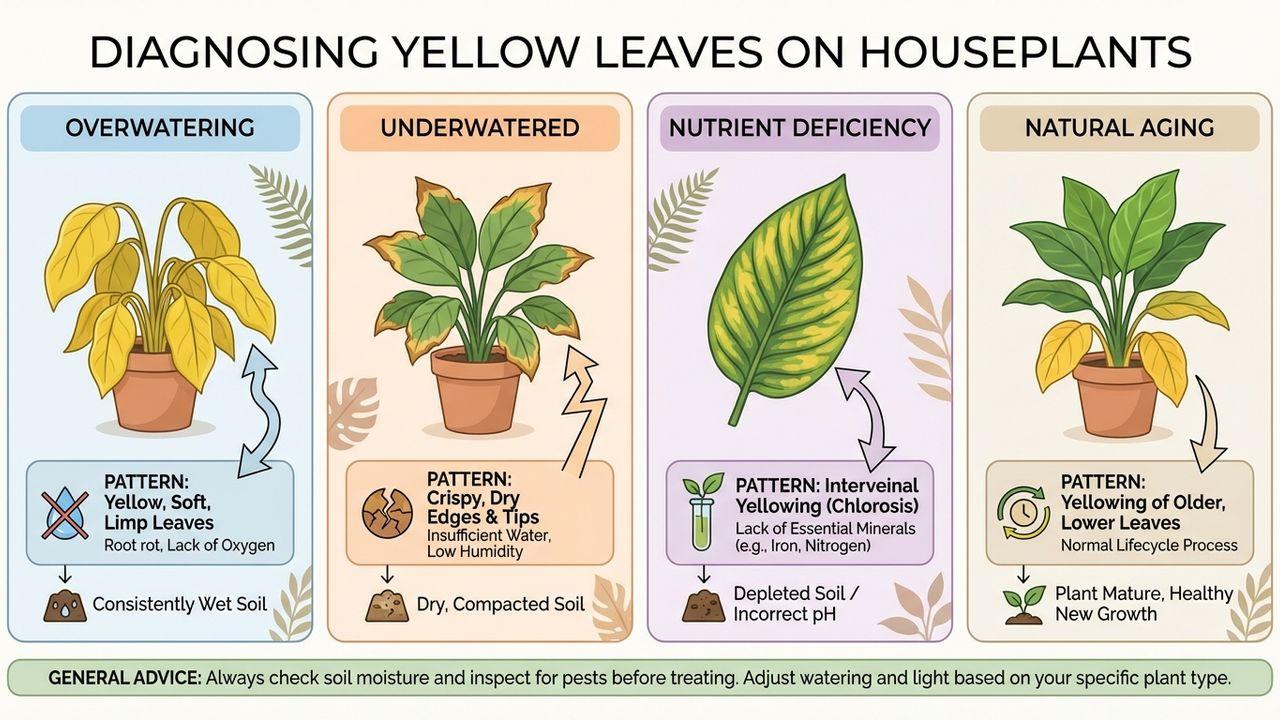
The same symptom can result from too much water, too little water, poor drainage, incorrect light, root problems, nutrient deficiencies, pests—or simply an old leaf reaching the end of its natural life.
A money plant may turn pale. A peace lily may develop yellow lower leaves. A balcony hibiscus may suddenly lose foliage after heavy rain. A newly purchased plant may begin yellowing only a few days after reaching home.
The correct treatment depends on the plant, which leaves are affected, how the roots are functioning and where the plant is growing.
First, Observe the Pattern
Before applying anything, examine the plant carefully.
Are only one or two older leaves yellow?
Are young leaves becoming pale while the veins remain greener?
Is the whole plant losing colour?
Are the leaves soft and drooping—or dry and crispy?
Can you see spots, insects, fine webbing or sticky deposits?
Is the growing medium constantly wet?
These clues can help narrow the possible cause.
A single old leaf turning yellow on an otherwise healthy plant may simply be natural ageing. Widespread yellowing combined with poor growth needs closer investigation.
30-Second Yellow-Leaf Check
| What you notice | What to investigate first |
|---|---|
| Yellow + soft leaves + constantly wet soil | Excess moisture or poor drainage |
| Yellow + dry/crispy leaves + very dry medium | Underwatering |
| New leaves pale with greener veins | Nutrient availability or growing-medium pH |
| Weak, pale growth stretching toward light | Insufficient light |
| Yellow leaves + webbing, sticky residue or insects | Pest infestation |
| Only one or two oldest leaves yellow | Natural ageing may be involved |
| Yellowing soon after moving or repotting | Transplant or environmental stress |
These are clues—not final diagnoses.
1. Overwatering and Poor Drainage
Excess water is one of the most common causes of decline in container-grown plants.
Roots need oxygen as well as moisture. When potting media remain saturated for long periods, air spaces fill with water and roots may become stressed or begin to decay.
Common signs include yellowing lower leaves, wet growing medium that does not dry, wilting despite moist soil, soft stems or roots, and—in severe cases—an unpleasant smell from the root zone.
If you grow plants indoors, choosing species suited to the available light and moisture conditions is equally important.
indoor plants to Green Mall’s Indoor Plants page.
What to do
Check moisture below the surface before watering again.
Ensure that drainage holes are open.
Empty saucers or decorative outer pots that hold standing water.
Allow the growing medium to dry to the level appropriate for that plant species.
If the plant continues to decline, gently inspect the roots. Healthy roots are generally firm. Severely decayed roots may become soft, damaged or dark.
Remove only clearly dead or rotten material using clean tools.
If necessary, repot the plant into an appropriate, well-draining growing medium.
well-draining growing medium to Green Mall’s Potting Media page.
Do not assume that every dark root is diseased, and do not remove healthy roots unnecessarily.
2. Underwatering
Too little water can also cause yellowing.
Plants exposed to prolonged water shortage may shed leaves to reduce water loss.
Possible signs include very dry growing medium, a noticeably lightweight container, wilting, crispy leaf margins and leaves that become yellow before dropping.
What to do
Water thoroughly when the plant genuinely needs it and allow excess water to drain.
If the growing medium has become extremely dry and repels water, rehydrate it gradually instead of allowing water to run immediately through gaps between the medium and pot.
Avoid compensating for previous drought by keeping the container permanently saturated afterward.
The objective is an appropriate moisture cycle—not permanently wet soil.
3. Is the Pot Part of the Problem?
Sometimes we blame the plant when the container itself is contributing to the problem.
A pot may be:
too small for the root system;
without adequate drainage holes;
sitting continuously in accumulated water;
or made unsuitable by the way it is being used.
Containers should suit both the plant and its location.
suitable pot or planter to Green Mall’s Pots & Planters page.
Before repotting simply because leaves are yellow, first confirm whether the plant is actually root-bound or whether drainage and watering are the real problems.
4. Too Much or Too Little Light
Different plants require different light conditions.
A shade-tolerant indoor plant may develop pale, bleached or scorched foliage when suddenly moved into harsh direct sunlight.
A plant receiving insufficient light may grow weakly, stretch toward a window, lose older leaves or develop generally poor colour.
What to do
Identify the light requirement of the particular species.
Move plants gradually rather than making sudden environmental changes.
Provide bright indirect light for species that prefer it.
Give sun-loving flowering plants the direct light they require, while protecting newly moved or recently purchased plants from abrupt exposure.
Remember:
“Indoor plant” does not mean “plant that can grow in a dark room.”
For balconies and gardens receiving strong natural light, choosing plants genuinely suited to outdoor conditions can prevent repeated problems.
outdoor plants to Green Mall’s Outdoor Plants page.
5. Nutrient Deficiency
Plants growing in containers have access to a limited volume of growing medium.
Over time, nutrients may become depleted, particularly during active growth.
Nitrogen deficiency can produce more general yellowing, often beginning with older foliage.
Iron-related chlorosis can sometimes cause younger leaves to become yellow while their veins remain relatively greener.
But there is an important warning:
Yellow leaves do not automatically mean the plant needs fertilizer.
Similar symptoms can result from damaged roots, inappropriate growing-medium pH, poor drainage and other stresses.
What to do
Check watering, drainage and root condition first.
If nutrition is genuinely the likely problem and the plant is healthy enough to feed, use a suitable fertilizer according to its instructions.
Avoid applying several fertilizers or micronutrient products simultaneously.
More fertilizer is not always better.
Excess soluble salts can damage roots and make an already stressed plant worse.
Green Mall also stocks gardening materials and plant-care essentials for maintaining home gardens.
gardening materials and plant-care essentials to the Garden Needs page.
6. Pests and Diseases
Sap-sucking insects can cause pale, yellow, speckled or distorted foliage.
Look carefully beneath leaves, around new growth and along stems for common pests such as aphids, mealybugs, scale insects, whiteflies and spider mites.
Fine stippling or webbing may indicate mites.
Sticky deposits may accompany certain sap-sucking pests.
Fungal and bacterial problems can also produce leaf spots, lesions or tissue decay.
However:
Yellowing by itself does not prove that a plant has a disease.
What to do
Where practical, isolate a heavily infested plant from healthy plants.
Identify the pest before selecting treatment.
Remove badly affected plant material where appropriate and clean tools between plants.
Use only products suitable for the plant and target problem, following label instructions.
Avoid routine pesticide spraying when no pest or disease has been identified.
7. Natural Ageing and Transplant Stress
Plants do not keep every leaf forever.
Older leaves naturally age, yellow and eventually fall.
Plants may also temporarily lose foliage after repotting, transport or a sudden change in light, temperature, humidity or watering conditions.
If healthy new growth continues and only occasional older leaves are affected, immediate treatment may not be necessary.
Observe the plant for several days rather than changing everything at once.
That makes it much easier to understand which factor is actually responsible.
Why Do Plant Leaves Turn Yellow During the Indian Monsoon?
Indian monsoon conditions deserve special attention.
Heavy rain, prolonged humidity, reduced evaporation and cloudy weather can keep containers wet much longer than expected.
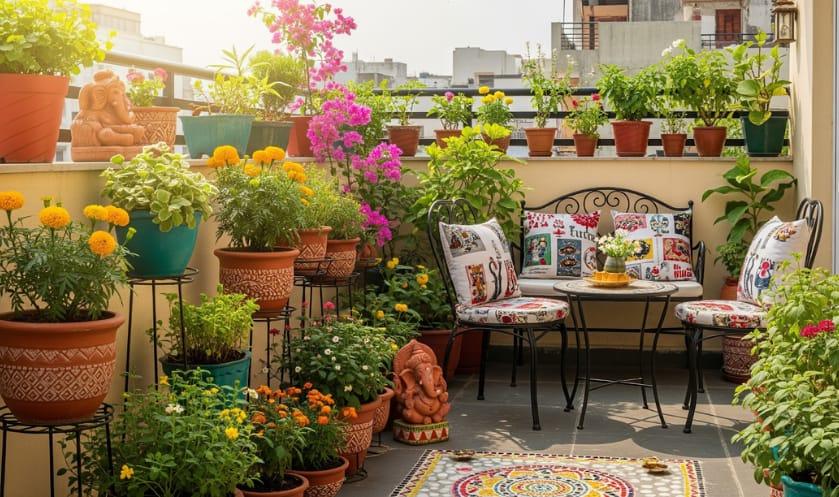
This is especially relevant to balcony, terrace and outdoor plants.
Common monsoon problems include blocked drainage holes, pots standing in water, containers receiving continuous roof runoff, overcrowded plants with poor airflow and gardeners continuing their normal watering schedule even though rainfall has already saturated the growing medium.
Monsoon Plant-Care Checklist
Move vulnerable pots away from continuous roof runoff.
Check drainage after heavy rainfall.
Ensure containers are positioned so that excess water can escape.
Do not water automatically when rainfall has already soaked the medium.
Remove fallen and decaying leaves from the pot surface.
Maintain appropriate spacing and airflow.
Inspect foliage regularly instead of applying preventive chemicals unnecessarily.
For plants that naturally require consistently moist conditions, however, do not allow the root zone to become excessively dry merely because it is monsoon season.
Plant care must remain species-specific.
A Simple Five-Minute Plant Diagnosis
When you notice yellow leaves, follow this order:
Step 1 — Identify the plant.
Then determine whether old leaves, young leaves or the whole plant are affected.
Step 2 — Check moisture below the surface.
Do not judge only from the appearance of the top layer.
Step 3 — Inspect drainage.
Consider recent rainfall as well as your own watering.
Step 4 — Examine light and pests.
Look under the leaves and around new growth.
Step 5 — Review the roots, growing medium and feeding history.
Do this if the problem persists.
Whenever practical, change one major factor at a time.
Otherwise, if you simultaneously repot, fertilize, move the plant, change watering and spray pesticide, you may never discover what the real problem was.
Still Not Sure What Is Wrong With Your Plant?
Before asking for advice, take four clear photographs:
1. The entire plant
2. The affected leaves
3. The pot and growing medium
4. The location where the plant is kept
Also note:
how frequently you water;
approximately how much sunlight the plant receives;
whether the plant has recently been moved or repotted;
and whether fertilizer or pesticide has recently been applied.
This information can make plant diagnosis considerably more useful than a close-up photograph of one yellow leaf.
When Should You Seek Professional Help?
Seek experienced plant-care advice if the plant is declining rapidly, the stem base becomes soft, roots appear extensively damaged, a pest infestation is spreading, a valuable specimen is affected, or repeated attempts at treatment have failed.
For gardeners in Kolkata and surrounding areas, Green Mall also provides home garden assistance and plant-care guidance.
home garden assistance and plant-care guidance to Green Mall’s Home Garden Service page.
Before Buying Fertilizer, Find the Cause
A yellow plant does not necessarily need another product.
If roots are waterlogged, additional fertilizer may not correct the problem.
If the plant is receiving insufficient light, pesticide will not help.
If an old leaf is simply completing its natural life cycle, the plant may require no treatment at all.
The best sequence is:
Observe → Investigate → Identify → Then Treat.
Green Mall Can Help You Choose the Right Solution
At Green Mall, we believe plant care should begin by understanding the problem rather than immediately selling a product.
Different plants require different combinations of light, water, growing media, nutrition and containers.
Our team can help gardeners choose suitable plants for homes, balconies, terraces and landscapes, along with appropriate pots, growing media and gardening requirements.
A healthy garden begins with the right plant in the right place—and careful observation before intervention.
contact Green Mall to the Contact Us page.
Need Help With a Yellowing Plant?
Bring the plant to Green Mall where practical, or first share clear photographs showing the whole plant, leaves, pot and growing conditions.
Ask us what may be wrong before buying another treatment.
Frequently Asked Questions
Why are my plant leaves suddenly turning yellow?
Sudden yellowing may result from changes in watering, drainage, light, temperature, root condition, nutrition or pests. Check what changed recently before treating the plant.
Does yellow foliage always mean overwatering?
No. Both excessive and insufficient water can contribute to yellowing, as can several unrelated problems.
Can yellow leaves turn green again?
Mild chlorosis may sometimes improve after the underlying problem is corrected, but severely yellow or damaged leaves frequently do not recover completely. Healthy new growth is often a better sign of improvement.
Should I remove yellow leaves?
Fully dead leaves can usually be removed carefully. However, do not remove large quantities of partly functional foliage from an already stressed plant without good reason.
Should I fertilize a plant with yellow leaves?
Not automatically. First investigate watering, drainage, roots, light and the pattern of yellowing. Fertilizer is useful when nutrition is genuinely contributing to the problem.
Why do plant leaves turn yellow during monsoon?
Persistent wetness, poor drainage, reduced light, high humidity and associated root or disease problems may all contribute. The cause should still be diagnosed for the individual plant.
Don’t Treat the Colour—Find the Cause
A yellow leaf is your plant telling you that something has changed.
Before watering more, feeding more or spraying something, ask:
What changed?
Water?
Light?
Drainage?
Roots?
Nutrition?
Pests?
Find the cause first.
Then treat the problem.
Green Mall — helping you grow healthier plants, not simply sell more products.